

医療法人社団 綾和会 浜松南病院

アイコン053-443-2111

浜松南病院 住所:浜松市中央区白羽町26番地 JR浜松駅から南へ車で約10分
~浜松市南部の中核病院~

採用情報

お問い合わせ

院長紹介

野﨑 晃 nozaki akira

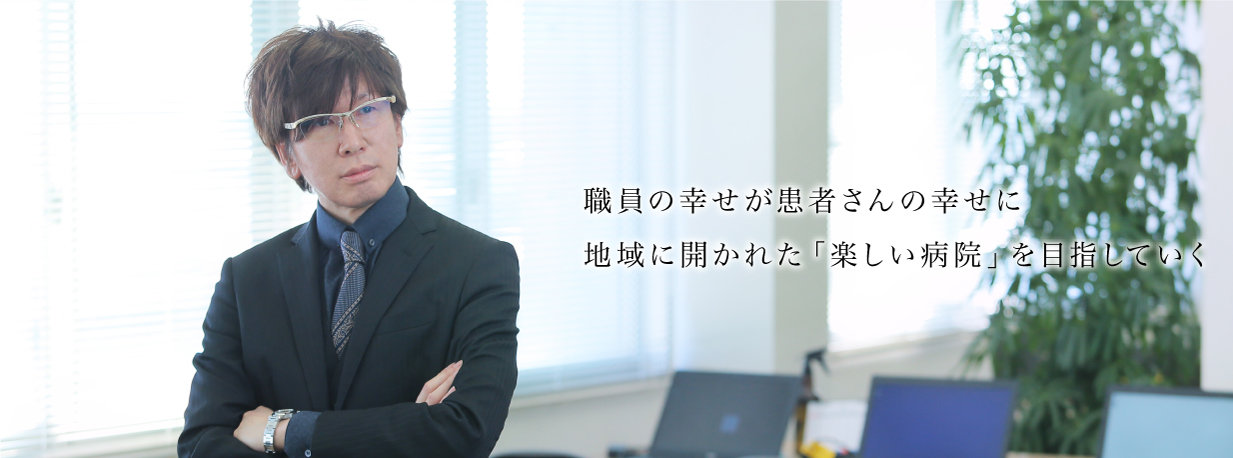
職員の幸せが患者さんの幸せに地域に開かれた「楽しい病院」を目指していく 職員の幸せが患者さんの幸せに地域に開かれた「楽しい病院」を目指していく

内科医として「点」ではなく
「線」で診る

岡山の出身で、大学は石川へ。卒業してからは、兵庫、香川、広島と、場所に縛られることなく診療を行ってきました。どこで働いていても、いつもその場所で求められる医療を全力で提供しています。日々、とても楽しく、医師としてのやりがいを感じています。
医学の面白さに目覚めたのは、臨床を始めてから。それまで勉強していた点と点が、臨床の現場で患者さんを診るようになり、点が線へと変わっていきました。私が内科を専門に選んだのも、患者さんを「点」ではなく、「線」で診ていきたいと考えたことがきっかけです。
例えば、手術や診察など今の状況へのピンポイントな治療は「点」で治すということ。内科は経過が長く、患者さんと総合的に関わりながら診ていくため、「線」の医療が必要だと思っています。
患者さんの未来まで診ることになるので、最終的には「人間の幸せは何か?」を追求していくこともできる。そうして一人ひとりの幸せを演出してあげるのが、医者の仕事ではないでしょうか。いわば「幸せのプランナー」なのです。


職員が
「家族を診てもらいたい」と
思うような病院に

私が「幸せにしたい」と思うのは、患者さんだけではありません。当院で働く職員たちみんなにも幸せになってほしい。職員が笑顔でなければ、患者さんは笑顔になれませんよね。ここで働く職員たちが「自分の家族を診てもらいたい」と思えるような病院にしていくこと。それが私の使命だと思っています。 この地域は喫煙率が高く、これまであまり健康を意識されずに暮らしてこられた方が多いように感じます。自分たちが「ここで家族を診てほしい」と思える病院を目指していけば、職員が両親や祖父母に「病院に行ってみよう」と声をかけたり、ご近所の方に声をかけたりすることもできるでしょう。それが地域の皆さんの健康を支えていくことにもつながります。
地域と病院をつなぐために、お祭りを開催するのも私の夢です。職員が心から楽しめるイベントを開催し、地域の人たちにも気軽に病院に来ていただく。地域と一体となるようなイベントを開催し、「病院は楽しいところ」だというイメージを持ってもらえたら嬉しいですね。


多職種の教育で糖尿病の
診療体制を充実させていく

How Betlama Explores the Evolution of Canadian Betting Regulations

Canada’s betting landscape has undergone a remarkable transformation over the past century, evolving from restrictive prohibitions to a more progressive regulatory framework that balances consumer protection with market innovation. Understanding this evolution requires examining the complex interplay between federal and provincial jurisdictions, shifting social attitudes, and the disruptive force of digital technology. Betlama has emerged as a valuable resource for those seeking to comprehend these regulatory changes, offering detailed analysis of how Canadian betting laws have adapted to contemporary realities while maintaining their commitment to responsible gaming practices.

The Historical Foundation of Canadian Betting Laws

Canada’s approach to betting regulation traces back to the Criminal Code of 1892, which established gambling as a federal criminal matter. For decades, most forms of betting remained illegal, with limited exceptions for charitable raffles and agricultural fair games. This restrictive environment persisted until 1969, when amendments to the Criminal Code permitted provinces to operate lottery schemes, marking the first significant shift toward regulated gambling.

The 1985 amendments represented a watershed moment in Canadian betting history. Parliament transferred authority over most gambling activities to provincial governments, fundamentally restructuring the regulatory landscape. This decentralization allowed each province to develop tailored approaches reflecting local preferences and priorities. Quebec established Loto-Québec in 1969, becoming a pioneer in provincial gambling operations, while other provinces followed with their own crown corporations throughout the 1970s and 1980s.

The federal-provincial division created a unique regulatory architecture. While provinces gained control over lottery schemes, casinos, and slot machines, the federal government retained jurisdiction over the Criminal Code provisions governing gambling. This dual-layer system has shaped Canadian betting regulations ever since, creating both opportunities for provincial innovation and challenges in maintaining national consistency. The definition of “lottery scheme” became particularly significant, as courts interpreted it broadly enough to encompass various gaming activities beyond traditional lotteries.

Provincial Divergence and the Digital Challenge

As provinces exercised their regulatory authority, distinct regional approaches emerged. British Columbia launched the country’s first legal online gambling platform in 2010 through the British Columbia Lottery Corporation, demonstrating how provincial monopolies could extend into digital spaces. Quebec followed with Espacejeux, while other provinces developed their own online offerings at varying paces. This provincial patchwork created an inconsistent national landscape where residents faced different legal gambling options depending on their location.

The rise of offshore online betting platforms presented regulatory challenges that exposed limitations in the existing framework. Despite provincial monopolies on legal gambling, Canadians increasingly accessed international betting websites operating in gray legal zones. These platforms existed in regulatory limbo—not explicitly legal under provincial schemes, yet not clearly prosecuted under federal law, which primarily targeted operators rather than individual bettors. Research from https://betlama.com highlights how this ambiguity prompted ongoing debates about modernizing regulations to address technological realities while protecting consumers and provincial revenue streams.

Provincial responses to this challenge varied considerably. Some jurisdictions focused on strengthening their own digital offerings to compete with offshore operators, while others explored partnerships with private sector companies. Ontario took the most ambitious approach, recognizing that monopolistic models struggled to compete with the sophisticated marketing and user experiences offered by international platforms. This realization set the stage for the most significant regulatory reform in decades, fundamentally reconceptualizing how provinces could regulate rather than merely operate betting markets.

The Ontario Model and Single-Event Sports Betting

Two pivotal developments in 2021 and 2022 reshaped Canadian betting regulations. First, Parliament passed Bill C-218 in June 2021, amending the Criminal Code to permit single-event sports betting. Previously, Canadians could only legally bet on parlay wagers requiring multiple game outcomes, a restriction that drove substantial betting activity to illegal markets. This federal change removed a major obstacle, allowing provinces to offer the sports betting products consumers actually wanted.

Second, Ontario launched its regulated iGaming market in April 2022, implementing a competitive licensing model unprecedented in Canadian gambling regulation. Rather than maintaining the provincial monopoly through the Ontario Lottery and Gaming Corporation, the province established the Alcohol and Gaming Commission of Ontario as regulator and iGaming Ontario as market operator. Licensed private operators could now legally offer online casino games and sports betting to Ontario residents, provided they met stringent regulatory standards.

The Ontario model represented a philosophical shift from government operation to government regulation. Operators undergo rigorous licensing processes examining financial stability, technical capabilities, responsible gaming measures, and compliance systems. The framework includes requirements for player protection tools, advertising standards, data security, and contributions to problem gambling research and treatment. Revenue sharing arrangements ensure the province benefits financially while creating competitive market conditions that discourage consumers from using unregulated offshore sites.

Early results from Ontario’s regulated market have been closely watched by other provinces considering similar approaches. The market attracted dozens of licensed operators, generating substantial provincial revenue while providing consumer protections absent from gray-market alternatives. Challenges emerged around advertising saturation and ensuring responsible gaming commitments translated into practice, prompting ongoing regulatory refinements. Other provinces have observed Ontario’s experience with interest, weighing whether competitive models better serve their populations than traditional monopolies.

Contemporary Trends and Future Directions

Current Canadian betting regulations reflect an ongoing balancing act between multiple objectives. Provinces seek to maximize revenue for public programs while protecting vulnerable populations from gambling harm. They aim to eliminate illegal markets by offering competitive legal alternatives, yet worry about normalizing gambling through ubiquitous advertising. They recognize consumer demand for convenient digital betting options while grappling with the addictive potential of 24/7 online access.

Indigenous gaming rights have added another dimension to regulatory discussions. First Nations have established casinos and gaming facilities under various agreements with provincial governments, creating important economic opportunities for Indigenous communities. Questions about Indigenous jurisdiction over online gambling and sports betting remain partially unresolved, with different provinces negotiating distinct arrangements. These discussions occur within the broader context of Indigenous self-determination and treaty rights, adding constitutional complexity to regulatory frameworks.

Technological advances continue challenging existing regulations. Mobile betting apps, live in-game wagering, cryptocurrency transactions, and emerging technologies like virtual reality gambling all raise novel regulatory questions. Regulators must update frameworks to address these innovations while maintaining core consumer protection principles. International regulatory cooperation has become increasingly important as betting companies operate across borders and players access global platforms.

The regulatory evolution also reflects changing social attitudes toward gambling. Once viewed primarily through moral and criminal lenses, gambling is increasingly understood through public health frameworks emphasizing harm reduction. This shift influences regulatory design, with greater emphasis on mandatory responsible gaming features, self-exclusion programs, and operator contributions to problem gambling services. Research into gambling behavior informs evidence-based policy development, moving beyond prohibition toward managed legalization with robust safeguards.

Looking ahead, Canadian betting regulations will likely continue evolving toward greater interprovincial coordination while respecting provincial autonomy. Discussions about national standards for consumer protection, advertising limits, and data sharing could produce more consistent frameworks across jurisdictions. The tension between provincial monopolies and competitive licensing models will persist, with each province determining which approach best serves its population. Federal involvement may increase if provinces request Criminal Code amendments to address emerging regulatory challenges or if concerns about national consistency intensify.

Canada’s regulatory journey demonstrates how betting laws adapt to technological change, shifting social norms, and economic considerations while maintaining fundamental commitments to consumer protection and responsible gaming. The evolution from blanket prohibition to nuanced provincial regulation reflects a pragmatic recognition that effective governance requires frameworks matching contemporary realities. As provinces continue experimenting with different regulatory models, the Canadian experience offers valuable lessons for jurisdictions worldwide grappling with similar challenges in modernizing their betting regulations for the digital age.

当院の診療の柱は整形外科です。年間300件以上の手術を行い、入院中のリハビリから、ご自宅に戻られてからの訪問リハビリまで、一貫してケアを提供しています。そうした整形外科での診療はそのままに、これからは私の専門分野でもある糖尿病をはじめとした内科診療も充実させていきたいと考えています。私がこれまで経験を積んできた、血液内科、消化器内科、糖尿病内科、内視鏡検査などの幅広い診療経験を、当院でも発揮していくつもりです。


私が長年携わってきたのが糖尿病の診療です。これまで何千人もの患者さんを診てきました。糖尿病の治療では、医師の力だけではなく、看護師、薬剤師、栄養士といった多職種チームでのケアが欠かせません。そのため、まずはスタッフのスキルアップのための教育に取り組む必要があります。
糖尿病の療養指導士の資格取得を積極的に応援し、治療についての知識を身に付けてもらうこともその一つ。ほかにも私が自作した練習問題にチャレンジしてもらい、その解説を通して、学ぶことの面白さも伝えていきたいと思っています。例えば、お菓子の食品表示を見たときに「炭水化物が○g入っているから、血糖値を下げるためにはどのぐらいのインスリンが必要か」など、身近なところから興味を持ってもらうのが、スタッフ教育の入り口だと思っています。

災害対策や在宅医療の推進で、
地域を支える

今後、30年以内に70~80%の確率で南海トラフ地震が起こると想定されています。当院では、地震が起きた際の災害拠点病院としての役割も担っています。浜松市は海からの距離も近く、ひとたび震災が起きれば津波の被害は免れない地域です。そのため、普段から防災への意識を高めておくことが重要です。いざというときの備えを徹底するなど、災害対策に力を入れていきたいと考えています。
また、在宅医療の分野では、地域全体のニーズに対してまだまだ対応できる人員が足りていないのが現状です。私は2022年10月に当院に赴任してから、病院での通常診療に加えて訪問診療も行ってきました。在宅医療は患者さんの最期に関わる医療です。「どうすれば患者さんがご自宅で幸せに過ごせるか」を考えていくことは、医師として最もやりがいのある仕事だと感じています。
私が目指すのは、医療が中心となった街づくり。ゆくゆくはこの病院を中心に街づくりをする「メディカル・コミュニティ」を構想しています。地域の皆さんが安心して暮らしていけるよう、「幸せ」に根差した医療の基盤を作っていきたいです。


profile

院長 野﨑 晃

専門 糖尿病内科
2001年4月  岡山大学病院
2002年10月 姫路赤十字病院
2003年4月  香川県立中央病院 糖尿病内科
2004年4月  広島市立広島市民病院 糖尿病内科
2006年4月  綱島会厚生病院 糖尿病センター長
2015年4月  同院 治験管理室室長を兼務
2020年10月 同院 副院長(糖尿病センター長、治験管理室室長兼務)
2022年10月 浜松南病院 院長

テレビ出演
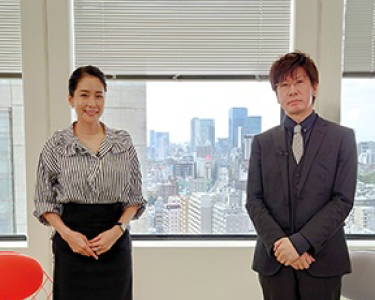
BS朝日 2022年2月26日

「名医に聞きたい」
~ヘルシーライフのすすめ~

BS朝日 2021年11月20日

「名医に聞きたい」
~ヘルシーライフのすすめ~
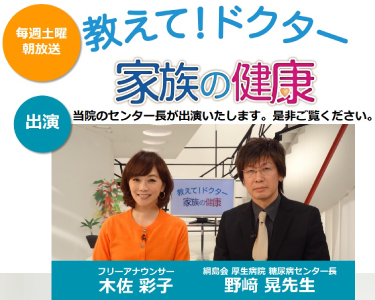
BS朝日 2015年1月24日

「教えて!ドクター 家族の健康」
糖尿病の合併症を予防しよう